Newsletter Subscribe
Enter your email address below and subscribe to our newsletter

 ByJohn A
Decluttering a kitchen opens instant cabinet space by removing duplicates and grouping like items. Real-world tips focus on relocating seldom-used goods and consolidating essentials. Adjustable, double-edged shelving and pullout organizers make access easier, while modular bins sort similar items. Pair these with daily routines—nightly resets and quick 2-minute wipes—to keep counters calm. Budget-friendly tools like clear bins, adjustable dividers, and labels support durable organization, but the best system still depends on how the space is used day to day.
Decluttering a kitchen cabinet quickly creates instant space by prioritizing essentials and removing duplicates.
The approach emphasizes decluttering strategies that separate must-haves from extras, then consolidates similar items.
A focused audit guides cabinet optimization: remove unused, relocate seldom-used, and group like objects.
Results include clearer shelves, faster access, and freedom to reallocate space for daily needs.
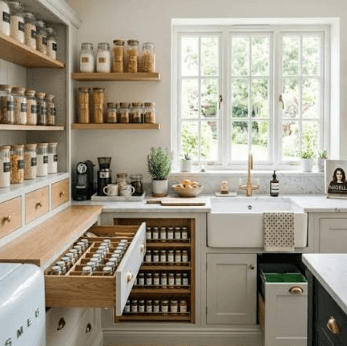
Smart storage in real kitchens hinges on accessible, repeatable solutions that work with everyday layouts. Teams assess existing cabinets, then install flexible options: double edged shelving for adjustable depth, modular bins to group similar items, and pullout organizers for easy access. This approach reduces clutter, supports flow, and maintains freedom to reconfigure as needs shift over time.
Daily routines keep counters calm by establishing predictable, low-effort habits that prevent buildup. In practice, a nightly sweep returns items to designated spots, while a morning 2-minute wipe maintains surface integrity. Automate a simple cadence: rinse, stack, and wipe as you go. This approach sustains Counter calm, reduces decision fatigue, and supports freedom to cook without clutter.
Budget-friendly tools can streamline organization without breaking the bank. The approach favors minimal, versatile items that fit varied spaces, enabling quick reconfigurations. Budget friendly choices emphasize durability and stackability, reducing clutter while expanding storage options. Organization tools should simplify daily tasks, promote consistency, and foster independence. Practical selections include adjustable dividers, clear bins, noteable labels, and multi-use hooks for flexible, affordable, liberating kitchen systems.
Maintaining organization with kids in the kitchen requires consistent, chore-based routines and visible safety habits. He observes that assigning age-appropriate tasks and clear rules reduces clutter while preserving freedom, ensuring everyone contributes and practice safeguards stays central to daily flow.
Hidden storage ideas for small kitchens include vertical shelving, bed-height dividers, and toe-kick drawers; small kitchens gain airflow and surface, while modular units maximize efficiency. A practical, actionable approach offers freedom through organized, clutter-free, quick-access solutions.
Grouping foods by prep smooths workflow; berries drying and grains storage should be adjacent to prep zones. A practical plan: batch wash, chop, and store compatible items together, minimizing movement and freeing time for creative cooking.
Label containers creatively without buying supplies by reusing scraps: cut printable labels from scrap paper, use tape to attach, or repurpose jars and folders. Budget labeling becomes practical, quick, and flexible, offering freedom to adapt as needs change.
See also: houseimprovehub
A study shows households save 20% more time with deliberate routines. The routine reduces clutter by enforcing rule-based intake. Implement routine consolidation and shelf rotation, prune duplicates, and place frequently used items front-and-center for lasting freedom.
In short, declutter for instant cabinet space, then pretend you didn’t. Install fancy double-edged shelves and pullouts, as if that will finally tame the chaos. Relabel and group, sure, but don’t forget to return everything to its assigned spot—tonight, not next Tuesday. Establish daily resets and call it “progress.” Budget-friendly tools? Naturally, they’ll transform your counters into showroom perfection—until the next spill. The real trick isn’t the system; it’s choosing to keep it up, consistently, forever.